
Brown University Gunman Found Dead in Storage Unit After Killing Spree
- Iven Forson
- Dec 19, 2025
- 4 min read

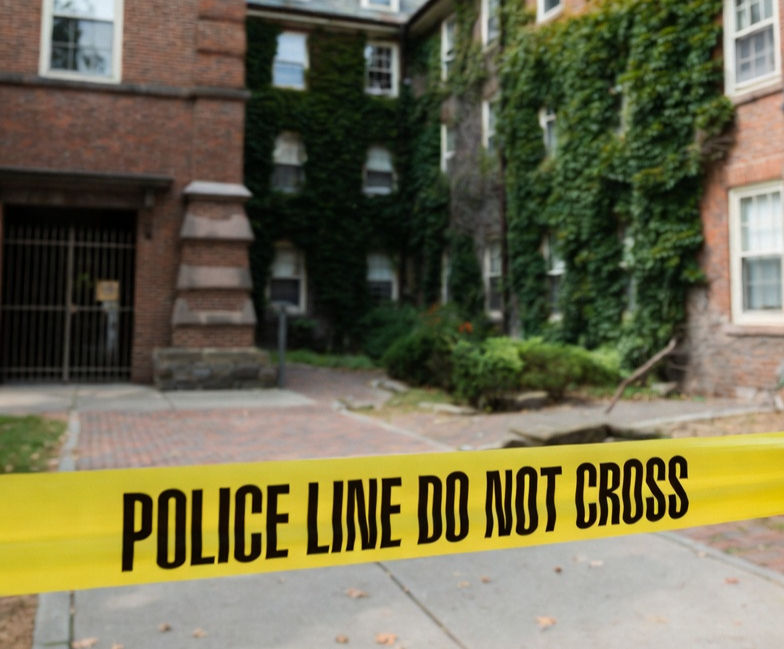
Salem, New Hampshire – The six-day nightmare that gripped America's Northeast came to a grim conclusion when police discovered the body of the Brown University mass shooter inside a storage facility in Salem, New Hampshire. The suspect, identified as 48-year-old Claudio Neves Valente, a Portuguese national, died from what authorities believe was a self-inflicted gunshot wound.
But the tragedy extends far beyond the walls of Brown University. Investigators now confirm that Valente went on to commit a second murder, killing a Massachusetts Institute of Technology professor just two days after his rampage at the Ivy League campus.
The Deadly Timeline: Two Attacks, Three Lives Lost
The horror began on December 13 when a masked gunman burst into Brown University's Barus & Holley engineering building during final exams. Students scrambled for cover as bullets tore through the study hall.
When the smoke cleared, two young lives had been cut short: Ella Cook, 19, a second-year student from Alabama, and Mukhammad Aziz Umurzokov, 18, an Uzbek-American freshman. Nine others sustained injuries, with six still hospitalized as of this week.
The killer vanished into the winter afternoon, triggering a massive multi-state manhunt that mobilized approximately 500 FBI agents alongside local law enforcement. Then, on Monday—just 48 hours after the university shooting—Valente struck again. This time, his target was 47-year-old Nuno F Gomes Loureiro, an MIT professor gunned down at his home in Brookline, Massachusetts, roughly 50 miles from Providence.
A Connection Buried in the Past
What linked these seemingly random acts of violence? A shared history that stretched back more than two decades. Authorities revealed that both Valente and Professor Loureiro had studied at the same university in Portugal during the late 1990s. Valente himself had briefly attended Brown University from autumn 2000 to spring 2001, pursuing a PhD in physics before leaving the program.
Brown University President Christina Paxson confirmed that Valente had "no current active affiliation" with the institution, making his return to campus all the more chilling.
Police have not disclosed a motive for either attack, leaving investigators—and the public—searching for answers about what drove a middle-aged academic to commit such devastating violence.
The Breakthrough: CCTV and a Rental Car
For nearly a week, the investigation appeared to stall, fueling growing frustration among Rhode Islanders demanding justice. Police had released grainy footage of a person of interest wearing a black face mask, and the FBI had posted a $50,000 reward for information leading to an arrest.
The breakthrough came when Providence Police Chief Oscar Perez and his team pieced together video evidence and public tips that led them to a car rental location. There, they found Valente's name—and it matched their person of interest.
CCTV footage captured the same vehicle near both crime scenes: the engineering building at Brown and the professor's home in Brookline. A witness at Brown University provided additional crucial information that helped investigators link the cases.
When authorities finally tracked Valente to the Salem storage facility, they found him dead alongside a satchel and two firearms. Evidence recovered from a nearby vehicle connected directly to the Providence shooting scene.
Rhode Island Attorney General Peter Neronha told reporters that preliminary findings suggest Valente died from a self-inflicted gunshot wound, though investigators couldn't immediately determine how long his body had been inside the unit. "Even though the suspect was found dead tonight, our work is not done," said FBI Special Agent-in-Charge Ted Docks. "There are many questions that need to be answered."
A Sophisticated Killer Who Covered His Tracks
One of the most disturbing revelations came from US State Attorney Leah B Foley, who described Valente as "sophisticated in hiding his tracks."Investigators discovered that Valente had been using a phone designed to obscure location tracking—a level of operational security that suggested premeditation and planning.
This technical savvy helped him evade capture for six days across multiple states, despite one of the largest manhunts in recent New England history.
Political Fallout: Green Card Lottery Suspended
The case has already triggered significant policy changes at the federal level. Homeland Security Secretary Kristi Noem announced the immediate suspension of the diversity visa lottery program—the same program that allowed Valente to enter the United States.
"He should never have been allowed in our country," Noem declared, revealing that Valente had entered the US through the Diversity Visa Program in 2017 and received a green card.
The program, which makes up to 50,000 visas available annually through random selection from countries with low US immigration rates, has now been paused under President Donald Trump's directive "to ensure no more Americans are harmed by this disastrous programme."
The suspension adds a controversial political dimension to an already heartbreaking tragedy, with immigration policy suddenly thrust into the center of a campus shooting investigation.
A Campus Still Reeling
For the Brown University community, the discovery of Valente's body brings little comfort. Final exams—normally a time of stress but also celebration—became a scene of unimaginable terror. Students who should be preparing for holiday breaks are instead processing trauma and mourning classmates.
The engineering building where the shooting occurred remains a crime scene, a stark reminder of how quickly normalcy can shatter.
Ella Cook's family remembers her as a bright student with a promising future. Mukhammad Aziz Umurzokov had barely begun his college journey when it was violently ended. The six students still in hospital face long recoveries, both physical and psychological.
The Questions That Remain
While Valente's death brings the manhunt to a close, it opens a void where answers should be. What motivated a former physics PhD student to return to Brown University 25 years later and open fire on strangers during exams? Why did he then travel to Brookline to kill a professor he'd known decades earlier in Portugal?
Did personal grievances from his academic past drive him to violence? Was there a specific trigger, or had he been planning these attacks for months—perhaps years?
FBI agents and local investigators now face the painstaking work of reconstructing Valente's final days, examining his communications, financial records, and movements. They'll interview anyone who had contact with him in recent years, searching for clues to his state of mind.
For the victims' families and the broader university communities at Brown and MIT, these answers may provide some measure of understanding—though they can never restore what was taken.
As one law enforcement official noted grimly: "The suspect is dead, but the investigation into why this happened is just beginning."


Comments