
Drama, Glory, and Chaos: Five Explosive Takeaways from Afcon 2025
- Jan 25
- 5 min read

The 2025 Africa Cup of Nations delivered everything football fans crave—breathtaking goals, underdog heroics, and a final so controversial it will be debated for years.
When Senegal's players stormed off the pitch in Rabat after a disputed penalty award to Morocco in the Africa Cup of Nations final, the tournament that had showcased African football at its finest suddenly descended into chaos. The 16-minute delay that followed epitomized a competition that thrilled with world-class action while exposing persistent challenges that African football must confront.
BBC Sport Africa's comprehensive review reveals five critical lessons from nearly a month of competition, during which 121 goals were scored—a tournament record—alongside controversies that left fans, players, and officials demanding answers.
If there was one undisputed winner at Afcon 2025, it was Morocco's infrastructure. The North African kingdom delivered stadiums, facilities, and technology that left visitors from across the continent stunned.
The Prince Moulay Abdellah Stadium in Rabat became the tournament's crown jewel, its massive LED exterior screens creating spectacular displays that symbolized Morocco's ambition. King Mohammed VI proudly declared the infrastructure demonstrated "resilience and a world-class level of readiness."
The pitches held up magnificently even through persistent rainfall—historically a nightmare for African tournament organizers. Omar Khyari from the Royal Moroccan Football Federation told BBC Sport Africa: "We are delighted because it shows the world that sometimes Africa can do it better than other countries."
This wasn't just about hosting Afcon. Morocco is preparing to co-host the 2030 FIFA World Cup alongside Spain and Portugal, with planned renovations to stadiums in Casablanca, Fes, Marrakesh, and Agadir. A massive 115,000-seater stadium near Benslimane remains under construction.
For Ghana and other African nations, Morocco has raised the bar impossibly high. Future co-hosts Kenya, Tanzania, and Uganda face the daunting task of meeting expectations for 2027—though dates remain unannounced and infrastructure concerns loom large.
Kenyan football federation president Hussein Mohammed acknowledged Morocco set "a new standard" while insisting "key steps" are being taken to improve infrastructure. The question is whether those steps can match what Morocco delivered.
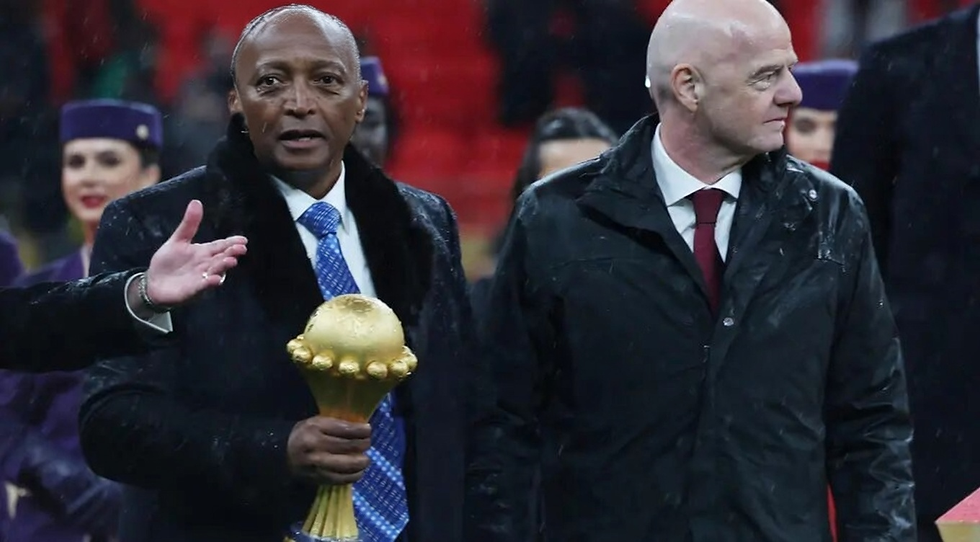
Follow the money, and you'll understand why Caf president Patrice Motsepe looked pleased throughout the tournament. The numbers tell a stunning story of financial growth.
Revenues jumped 90% compared to previous editions. Ticket sales exploded from $11 million at the 2023 tournament in the Ivory Coast to $55 million in Morocco. Caf expanded its sponsor portfolio to 23 major partners while leveraging social media to boost the competition's global profile.
The projected net profit? A staggering $114 million—up from $75 million two years earlier.
But here's the uncomfortable question: Can Caf replicate these figures anywhere else? Nigeria's women's star Asisat Oshoala recently complained that Morocco has become the "new headquarters" of African football, saying it's "getting boring" returning so often. The country is hosting its third consecutive Women's Nations Cup alongside the Afcon.
Critics wonder whether Caf's decision to shift Afcon from biennial to quadrennial hosting from 2028 reflects concerns about generating similar value in other countries. Morocco works financially—but at what cost to continental rotation and opportunity?
The officiating controversy that exploded in the final wasn't an isolated incident—it was the culmination of weeks of questionable decisions.
Jean-Jacques Ndala marshalled the championship match competently until second-half stoppage time, when everything unraveled spectacularly. His decision to blow the whistle for a challenge on Achraf Hakimi just as Senegal put the ball in Morocco's net sparked fury. Six minutes later, when he awarded Morocco a penalty after VAR review, Senegal's players had seen enough—they walked off.
Morocco boss Walid Regragui called the scenes "shameful." Senegal's federation filed formal complaints. Caf has yet to announce sanctions.
But the problems ran deeper. VAR implementation—nearly flawless at the 2023 tournament—took a backward step. Long delays plagued reviews. Questionable handball and penalty calls frustrated teams. Surprisingly, Morocco's heavy investment didn't include semi-automated offside technology.
Even Regragui, whose team benefited from some calls, felt compelled to address conspiracy theories before the semifinals: "I watch a lot of matches and the controversies are the same everywhere, in Africa or in Europe."
For Ghanaian fans who've seen the Black Stars suffer from poor officiating, the Afcon 2025 refereeing standards offered little comfort about continental improvement.
Senegal's football federation raised alarm bells that should concern every African football association. Their squad was mobbed when arriving by train in Rabat for the final—a security failure that could have turned tragic.
Inside stadiums, crowd control problems persisted. BBC Sport Africa witnessed fans caught in crushes and penned into dangerously tight spaces. During the final, Senegalese supporters clashed with security after the controversial penalty award.
Off-pitch gamesmanship crossed ethical lines. Moroccan ballboys wrestled towels away from Senegal goalkeeper Edouard Mendy's understudies—echoing similar incidents during the semifinal when Nigeria keeper Stanley Nwabali had his towel stolen twice.
Senegal's federation also protested receiving fewer than 4,000 tickets for a final held in a 69,500-capacity stadium—raising questions about fair allocation.
While crowd control challenges aren't unique to Africa—witness Euro 2020 and Champions League final incidents—Caf must prioritize fan and player safety if it wants to maintain the tournament's growing prestige.

Twenty players walked tightropes in the semifinals, knowing a single yellow card would rule them out of the final. Senegal captain Kalidou Koulibaly and midfielder Habib Diarra ultimately missed football's biggest stage for that reason.
Caf wipes all yellow cards after the group stage, meaning players accumulate cautions across just three knockout matches before potential suspension. While discipline matters, fans deserve to see the strongest possible sides in finals.
Nigeria's Calvin Bassey and Egypt's Hossam Abdelmaguid would have suffered the same fate had their teams advanced. Coaches, players, and media universally want regulations that prioritize showcasing talent over arbitrary accumulation rules.
Meanwhile, the archaic practice of drawing lots to separate teams with identical group stage records nearly occurred three times. While potentially dramatic for neutrals, using fair play records or attacking metrics would better serve the teams involved.
Afcon 2025 proved African football can deliver world-class competition with proper infrastructure and investment. The 121 goals and passionate crowds demonstrated why this tournament captivates the continent.
But the controversies—officiating failures, security lapses, questionable regulations—expose work still needed. As Kenya, Tanzania, and Uganda prepare for 2027, they face impossible comparisons to Morocco's standard.
For Ghana, watching from the sidelines after failing to qualify, the lessons are clear: African football is advancing rapidly, and countries that don't invest in infrastructure, youth development, and professional standards risk being left behind.
The 2025 tournament will be remembered for Senegal's controversial triumph and Morocco's spectacular hosting. Whether lessons are learned from both the triumphs and failures will determine African football's trajectory for the next generation.
DISCLAIMER: Information on this website is for general purposes only. Views expressed are those of the authors and do not necessarily reflect our official position. We are not liable for actions based on content.


Comments