
NPP Claims Mahama's "Reckless Expansion" of Gold Programme Cost Ghana $214 Million
- Iven Forson
- 6 days ago
- 3 min read

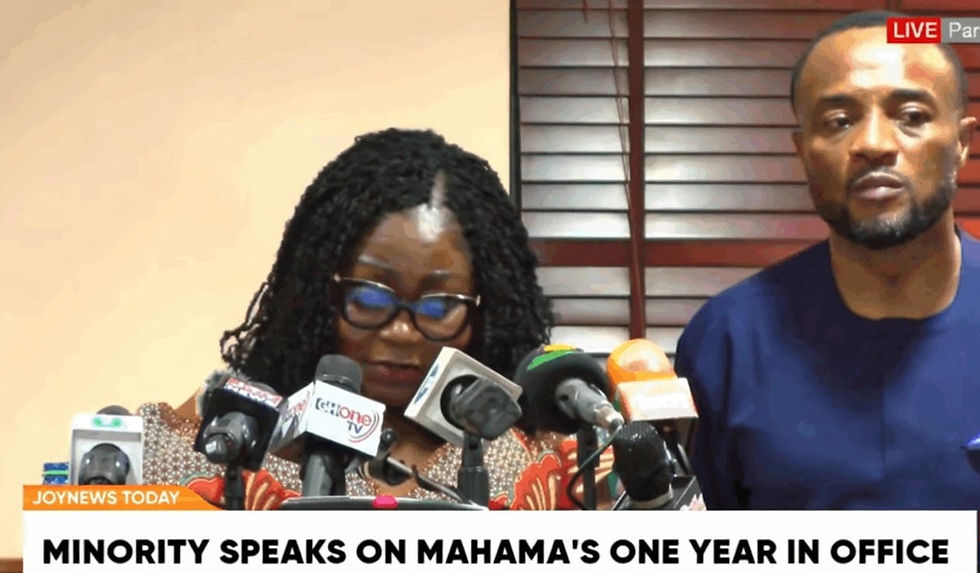
The political battle over Ghana's Gold-for-Reserves programme has intensified, with the opposition New Patriotic Party accusing President John Mahama's administration of mismanaging an initiative they claim to have created.
In a fiery press briefing on Thursday, the Minority in Parliament alleged that the government's handling of the gold purchasing scheme has resulted in a staggering US$214 million loss in just nine months, sparking what they've labeled a major economic scandal.
Deputy Minority Leader Patricia Appiagyei, who represents Asokwa constituency, led the charge with pointed accusations against the current administration's stewardship of the programme.
"The programme as we designed and implemented it did not lose US$214 million in nine months," Madam Appiagyei declared, drawing a sharp contrast between the NPP's previous management and what she termed the government's reckless expansion.
She insisted that the Gold-for-Reserves initiative was conceptualized, designed and implemented by the NPP government under former President Nana Akufo-Addo, and operated with what she described as discipline, transparency and accountability.
The Minority painted a vivid picture of what the alleged losses mean for ordinary Ghanaians. According to their calculations, the US$214 million translates to approximately GH¢2.6 billion at current exchange rates.
Madam Appiagyei argued this sum could have transformed Ghana's healthcare and education sectors. "This money could have been used to build hospitals, equip schools and provide storage facilities for farmers, but was instead lost through what she termed a politically connected gold scheme," she stated.
The opposition MP questioned what changed after President Mahama returned to office, suggesting the programme had been functioning properly until the change in administration.
The Minority anchored their allegations on an International Monetary Fund report, which they claim documents the losses attributed to operations involving GoldBod and the Bank of Ghana.
According to Madam Appiagyei, President Mahama inherited a working programme but proceeded to politicize and expand it recklessly, placing it in what she called "unprepared and potentially conflicted hands."
The accusations haven't gone unchallenged. Madam Appiagyei acknowledged that both GoldBod and the Bank of Ghana have categorically denied making any losses.
GoldBod issued an emphatic rebuttal on January 3, 2026, rejecting the loss claims entirely. The institution's Chief Executive Officer countered with impressive figures, stating that GoldBod generated over GH¢960 million in revenue against just GH¢120 million in expenditure, projecting a healthy surplus of between GH¢700 million and GH¢800 million.
However, the Deputy Minority Leader remained unconvinced by GoldBod's financial performance claims.
"These are bold claims, but they do not answer the central issue," Madam Appiagyei insisted, maintaining that GoldBod's response fails to address the specific concerns raised in the IMF report.
She called on the government to provide transparent explanations for how a programme that allegedly operated without losses under the previous administration has deteriorated so dramatically.
The controversy highlights the deep political divisions over economic management in Ghana, with both sides claiming superior stewardship of national resources.
While the NPP portrays itself as the architect of a successful gold reserves programme now undermined by poor management, the current administration and GoldBod present a picture of profitability and effective operations.
The Minority's accusations place fresh pressure on the Mahama administration to provide detailed accounting of the Gold-for-Reserves programme's performance since taking office.
As Ghanaians grapple with economic challenges, the debate over whether US$214 million was truly lost or whether the programme remains profitable will likely intensify in the coming weeks.
The outcome of this controversy could significantly impact public confidence in the government's economic management and shape the narrative around resource mobilization strategies in Ghana. With an IMF report, GoldBod's denials, and political accusations all in play, Ghanaians deserve clarity on what's really happening with their gold reserves. DISCLAIMER: This article is for informational purposes only. Views expressed are those of the author and do not necessarily reflect the official position of The Source News Ghana. Report errors: markossourcegroup@gmail.com


Comments