
Xi Jinping's Closest Military Ally Falls: China Investigates Top General for Corruption
- Jan 25
- 4 min read
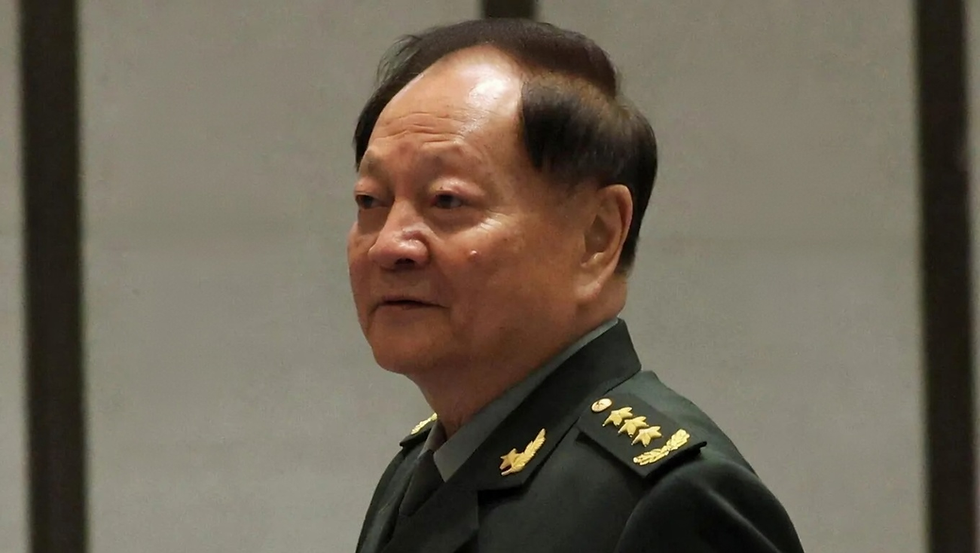
When your father helped found the Communist Party, and you've stood beside China's most powerful leader for years, you might think you're untouchable. General Zhang Youxia is about to find out otherwise.
In a stunning development that has sent shockwaves through Beijing's corridors of power, China's defence ministry announced Friday that it has launched an investigation into the country's highest-ranking military officer—General Zhang Youxia, widely regarded as President Xi Jinping's most trusted military confidant. The probe, targeting Zhang for "grave violations of discipline and the law," represents one of the most dramatic developments in Chinese military politics in recent memory.
The ministry's statement was characteristically sparse on details, offering no specifics about what exactly Zhang allegedly did wrong. But seasoned China watchers know the code: in Chinese political parlance, accusations of "violations of discipline and the law" typically serve as diplomatic language for corruption charges.
The investigation isn't limited to Zhang alone. The defence ministry revealed that General Liu Zhenli, another senior military officer, faces similar scrutiny. Both men now find themselves caught in the crosshairs of President Xi's relentless anti-corruption machinery—an apparatus that has already claimed the careers of hundreds of officials and military leaders since Xi took power.
Zhang's fall is particularly striking given his seemingly impeccable credentials and proximity to power. At 75 years old, he serves as vice-chairman of the Central Military Commission (CMC)—the Communist Party organ headed by President Xi that controls China's armed forces. He also holds a seat on the party's elite 24-member Politburo, placing him among China's most influential decision-makers.
His revolutionary lineage seemed to guarantee lifetime protection. Zhang's father was among the founding generals of the Chinese Communist Party, embedding the family deep within the party's aristocracy. Zhang himself joined the People's Liberation Army in 1968 and stands as one of the few senior Chinese leaders with actual combat experience—a rarity in modern China's military leadership.
Perhaps most tellingly, Zhang had been kept in service beyond the customary retirement age for Chinese military officers, a privilege typically reserved for those enjoying the paramount leader's absolute confidence. Until now, that seemed to describe Zhang's relationship with Xi perfectly.
This latest development didn't emerge from nowhere. The investigation into Zhang and Liu follows the expulsion of nine top generals in October—one of the largest public military purges China has witnessed in decades. The pattern is unmistakable: Xi is systematically cleaning house within the armed forces.
Rumors about Zhang and Liu's potential troubles began circulating in December when both men were conspicuously absent from a high-level party event. In China's opaque political system, such absences from major gatherings often serve as the first public signal that someone has fallen from grace. Friday's announcement confirmed what insiders had been whispering about for weeks.
Since ascending to power, President Xi has wielded anti-corruption campaigns as a signature tool of his leadership. He has publicly declared corruption "the biggest threat" to the Communist Party and insisted that "the fight against it remains grave and complex." In recent years, the military has become a primary target of these cleanup efforts.
The campaign has two schools of interpretation. Supporters argue it promotes good governance and strengthens the party by rooting out genuine wrongdoing. Critics, however, see it as a convenient mechanism for Xi to eliminate political rivals and consolidate personal power under the guise of fighting graft.
Whether genuine reform or political purge—or some combination of both—the effect is undeniable: China's military leadership is being fundamentally restructured, with loyalty to Xi increasingly appearing to be the only reliable shield against investigation.
The practical implications of these purges are staggering. With Zhang and Liu now under investigation, the Central Military Commission has been whittled down from its original seven members to just two: Xi himself, who chairs the body, and Zhang Shengmin, who oversees the military's disciplinary affairs.
Running the world's largest armed forces—over two million active personnel—with such a skeleton leadership team raises obvious questions about command effectiveness and institutional stability. It also concentrates extraordinary power in Xi's hands, as he now operates with minimal checks even within the military hierarchy.
For international observers, particularly in Africa, where China has expanded its military and economic footprint significantly, these developments matter. Chinese military leadership instability could affect everything from peacekeeping operations to defense cooperation agreements across the continent.
Ghana, like many African nations, has deepened ties with China through infrastructure projects, trade relationships, and diplomatic engagement. Major personnel upheavals in Beijing's military and political establishment inevitably influence how China projects power globally, including in West Africa.
Significant mysteries remain. What specifically are Zhang and Liu accused of doing? How deep does the alleged corruption run? Were these investigations driven by genuine evidence of wrongdoing, or are they politically motivated removals disguised as anti-corruption enforcement?
The Chinese system's opacity makes definitive answers nearly impossible from the outside. What investigations will reveal, what punishments might follow, and who else might be implicated remain unknown.
If Zhang Youxia—revolutionary aristocrat, combat veteran, Politburo member, and Xi's supposed closest military ally—can fall, then truly no one in China's power structure is safe. That appears to be precisely the message Xi wants to send.
As this drama continues to unfold, one thing is certain: the relationship between China's paramount leader and his military is being fundamentally redefined. Whether that leads to a more professional, less corrupt armed forces or simply a more personally loyal one depends entirely on which narrative you believe about Xi's ultimate objectives.
For now, General Zhang Youxia has become the latest cautionary tale in modern Chinese politics: proximity to power is no guarantee of protection when the winds shift.
DISCLAIMER: Information on this website is for general purposes only. Views expressed are those of the authors and do not necessarily reflect our official position. We are not liable for actions based on content.


Comments